Why the Skills That Made You Successful May Be Sabotaging Your Love Life
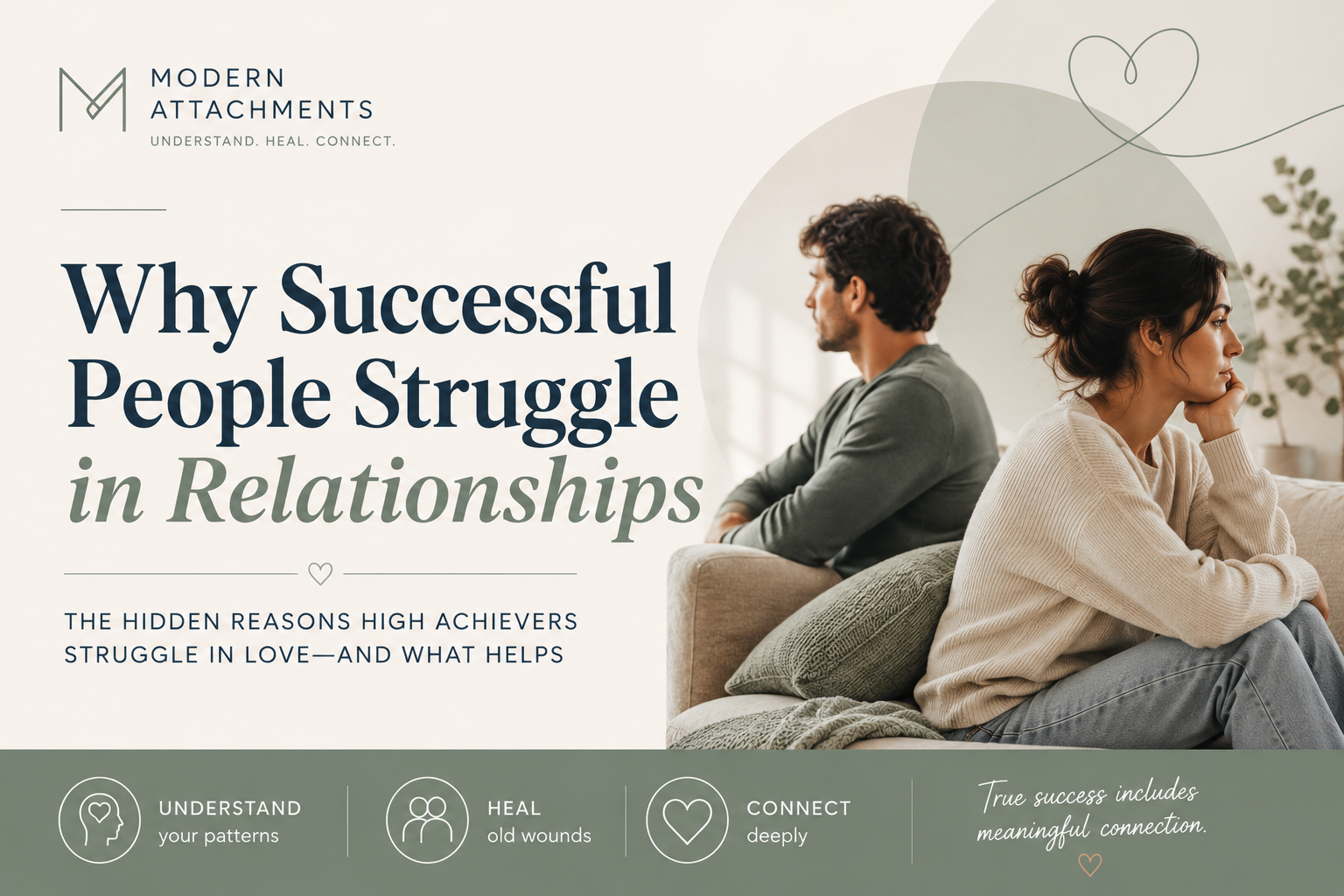
You've built a career.
You've earned degrees, promotions, certifications, respect, and independence.
People come to you for advice. You solve problems for a living. You know how to set goals, make plans, and execute.
So why does dating feel like the one area of your life that refuses to follow the same rules?
If you've ever thought:
"I've done everything right. Why isn't this working?"
"How can I be so competent at work and so confused in dating?"
"Why do relationships feel harder than building a career?"
You're not alone.
In fact, many of the skills that make people highly successful professionally can unintentionally create challenges in their love lives.
Not because those skills are bad.
Because relationships operate by different rules.
Success and Relationships Reward Different Things
At work, success often comes from:
✅ Control
✅ Predictability
✅ Performance
✅ Strategy
✅ Efficiency
✅ Independence
In healthy relationships, growth often requires:
✅ Vulnerability
✅ Uncertainty
✅ Emotional flexibility
✅ Collaboration
✅ Patience
✅ Interdependence
The very traits that help you excel professionally can sometimes make connection more difficult.
Let's look at a few common examples.
Skill #1: Problem-Solving
Why it works at work
You identify problems.
You create solutions.
You take action.
People value you because you can make things happen.
Why it can create problems in relationships
Relationships aren't always problems to solve.
Sometimes they're experiences to move through.
Many high-achievers instinctively try to fix discomfort:
Fix conflict
Fix uncertainty
Fix their partner's emotions
Fix dating outcomes
But connection often grows when people feel understood—not managed.
What to build instead
Emotional presence.
Instead of asking:
"How do I solve this?"
Try asking:
"How do I stay present with this?"
This skill allows intimacy to deepen because your partner experiences you as emotionally available rather than strategically helpful.
Skill #2: Independence
Why it works at work
You don't need anyone.
You figure things out yourself.
You carry your own weight.
You are reliable.
Why it can create problems in relationships
Extreme self-sufficiency can accidentally create emotional distance.
Many successful people become so accustomed to handling everything alone that receiving support starts to feel uncomfortable.
You may tell yourself:
"I don't want to be needy."
"I can do it myself."
"It's easier if I just handle it."
But intimacy requires allowing someone to matter.
What to build instead
Healthy interdependence.
Interdependence is not dependence.
It's the ability to remain fully yourself while allowing others to support you.
This might look like:
Asking for help
Sharing worries before you've solved them
Letting someone show up for you
Relationships don't grow through self-sufficiency.
They grow through shared experience.
Skill #3: Strategic Thinking
Why it works at work
You anticipate problems.
You think ahead.
You assess risk.
You make smart decisions.
Why it can create problems in dating
Strategic thinking can easily become overthinking.
Instead of experiencing a connection, you start analyzing it.
You find yourself wondering:
"What does that text mean?"
"Are they losing interest?"
"What should I do next?"
"Where is this heading?"
Your brain becomes focused on predicting outcomes rather than gathering information.
What to build instead
Curiosity.
Curiosity allows you to learn about someone before deciding what they mean.
Instead of asking:
"Do they like me?"
Ask:
"Do I like them?"
That subtle shift changes everything.
Skill #4: High Standards
Why it works at work
You expect excellence.
You care about quality.
You hold yourself accountable.
Why it can create problems in relationships
High standards are not the problem.
Perfectionism is.
Many successful people unknowingly bring performance metrics into dating.
They evaluate themselves constantly:
Did I say the right thing?
Did I look attractive enough?
Am I interesting enough?
Am I falling behind?
Relationships aren't performance reviews.
Connection doesn't happen because you perfectly execute every interaction.
What to build instead
Authenticity.
The goal is not to be impressive.
The goal is to be known.
People fall in love with real humans—not polished presentations.
Skill #5: Productivity
Why it works at work
You maximize time.
You optimize systems.
You create efficiency.
Why it can create problems in relationships
Relationships are inherently inefficient.
They require:
Repetition
Conversations
Misunderstandings
Repair
Time
There is no shortcut to emotional intimacy.
You cannot hack your way into a secure relationship.
What to build instead
Patience.
Some of the most meaningful parts of connection happen slowly.
Trust is built.
Safety is built.
Love is built.
The strongest relationships are often less about speed and more about consistency.
The Hidden Challenge for High-Achievers
Many successful people have spent years developing skills that help them manage their external world.
But relationships ask us to develop skills that help us navigate our internal world.
That's often where things get complicated.
You may know how to:
Lead a team
Run a business
Raise a family
Earn a degree
Solve complex problems
But no one taught you how to:
Tolerate uncertainty
Communicate needs
Set healthy boundaries
Receive love
Trust yourself in relationships
These are skills too.
And like any skill, they can be learned.
If You Feel Stuck in Dating, It Might Not Be Because You're Doing Something Wrong
It may simply be that you're trying to use achievement skills in a space that requires relationship skills.
The goal isn't to become less ambitious.
The goal is to expand your toolkit.
Keep your intelligence.
Keep your drive.
Keep your standards.
But add:
Emotional awareness
Vulnerability
Curiosity
Flexibility
Self-trust
Because success can help you build an incredible life.
But connection requires learning how to share it.
Ready to Break the Pattern?
If dating feels confusing despite being successful in every other area of life, the issue may not be who you're attracting—it may be the relationship skills you were never taught.
The good news?
They're learnable.
And often, the people who thrive most in relationships aren't the ones who have it all figured out.
They're the ones willing to approach love with the same intention they brought to every other area of growth.
Not Sure Which Relationship Skills You Need Most?
Many high-achieving professionals discover that their relationship challenges are connected to deeper attachment patterns.
Take the Attachment Style Quiz to learn how you approach connection, intimacy, communication, and vulnerability - and discover practical next steps for building healthier relationships.