
Why Love Feels So Much Harder Than It Should
ANXIOUS ATTACHMENT COACHINGCRAVES CLOSENESS. FEARS ABANDONMENT.

You want love deeply and a strong connection, but worry, overthinking, and insecurity get in the way. You’re not “too much” - you just learned to seek safety in the wrong places.
As seen in:



Signs You Might Have Anxious Attachment
You overthink texts, tone, and timing.
You crave reassurance and get triggered easily.
You worry about your partner pulling away.
You feel overwhelmed when plans change.
You struggle to feel secure, in even good relationships.
You often ignore red flags to keep the peace.
You love deeply and fear not being enough.
In Relationships You Might…
Seek constant closeness and validation.
Feel anxious when your partner is distant.
Overthink or spiral after disagreements.
Take things personally.
Struggle to set boundaries.
Ignore your own needs to keep the connection.
If this sounds familiar, you’re not alone - you’re not doomed to repeat the same painful patterns.
Who This Is For:
Feel stuck in the same relationship patterns
Struggle with anxiety in relationships
Pull away to protect yourself
Have a hard time trusting or opening up
Want deeper, more secure connections
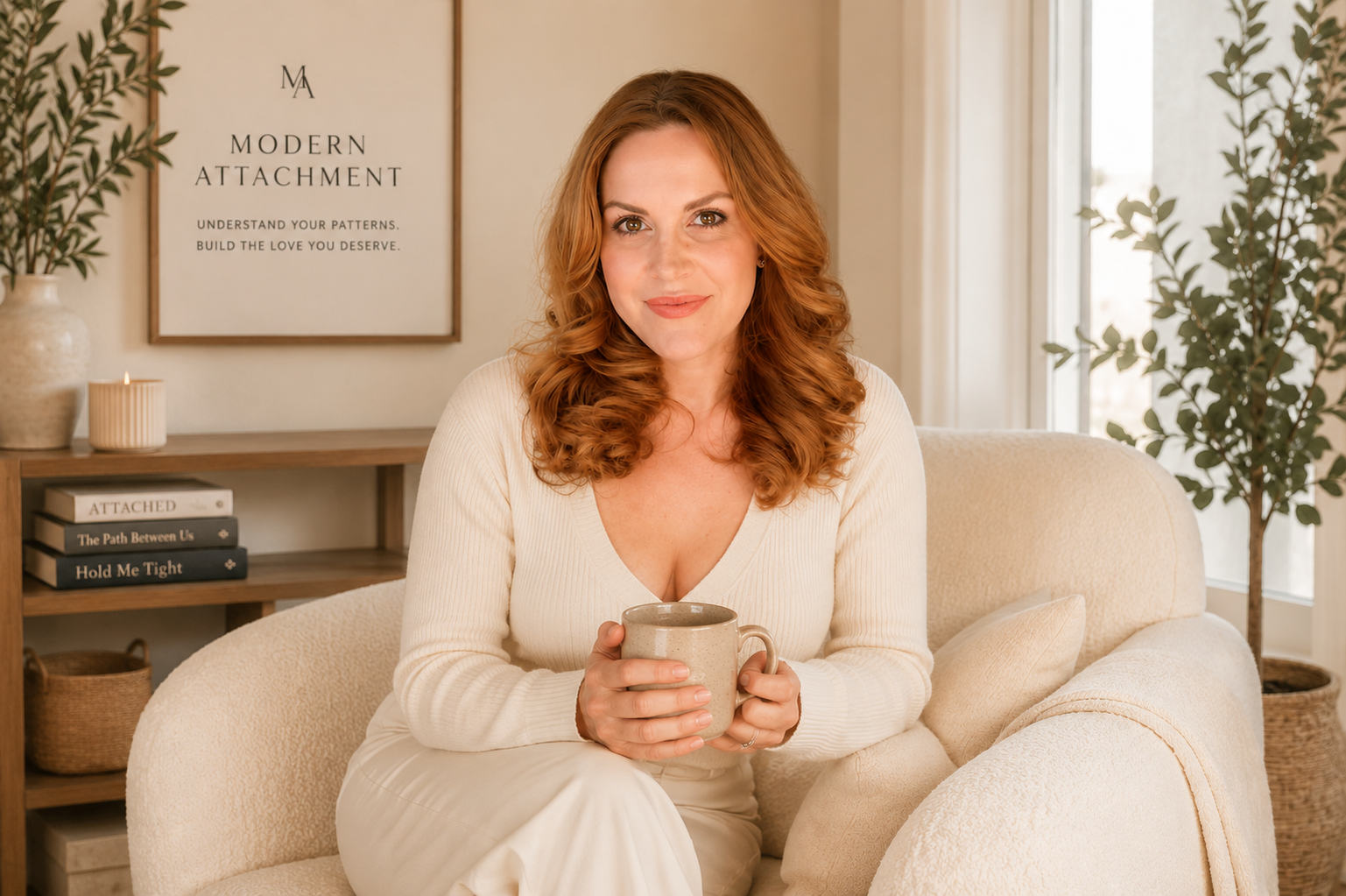

When you understand your attachment style, you stop blaming yourself and start building the love you’ve always wanted.
-Dr. Lindsay O’Shea
Clinical Psychologist & Attachment Expert
What’s Underneath Anxious Attachment?
Anxious attachment often develops when important relationships feel inconsistent, unpredictable, or emotionally uncertain. For some people, these patterns begin in childhood. For others, attachment insecurity may be strengthened by experiences such as heartbreak, betrayal, emotionally unavailable partners, loss, or repeated relationship disappointments.
Over time, your nervous system learns to stay alert for signs of rejection, distance, or disconnection. You learned that you had to earn love, be perfect, or stay small to keep the connection.
The good news? Attachment patterns are learned - and they can change.

Unpredictable Care
Connection felt unpredictable, so you learned to stay alert for changes.

Conditional Love
You learned that connection felt safer when you performed, pleased, or over-functioned.

You learned that relationships could disappear, so you became highly sensitive to distance and rejection.
Fear of Abandonment

People Pleasing
You learned to prioritize harmony and connection, even when it meant ignoring your own needs.

Hyperactivation
Your nervous system stays on high alert for signs of disconnection.
Anxious Attachment Doesn't Always Come From Trauma
Many people with anxious attachment grew up in loving homes.
Attachment insecurity can develop when important relationships feel emotionally uncertain, inconsistent, or difficult to rely on - not necessarily because anyone intended harm.
Sometimes this happens when:
Emotional needs aren't consistently understood or responded to
Caregivers are stressed, overwhelmed, or emotionally unavailable
Relationships feel unpredictable
Later relationship experiences reinforce insecurity
The goal isn't to blame anyone.
The goal is to understand the patterns so you can change them.

How Attachment Style Coaching Helps

GAIN CLARITY
Understand your attachment style and relationship patterns.

HEAL OLD WOUNDS
Process past experiences that shaped the way you love and connect.

CHANGE PATTERNS
Build new tools to break cycles and respond instead of reacting.

SELF-TRUST
Strengthen your sense of safety, confidence, and self-trust.

RELATIONSHIPS
Attract and maintain secure, fulfilling connections.
UnPattern. Reclaim. Rewire.
The Modern Attachment Approach
UnPattern
We uncover the subconscious patterns keeping you stuck in anxiety, overthinking, and people-pleasing.

2. Understand
We make sense of your attachment blueprint - so you can stop blaming yourself and start getting curious.

3. Rewire
We regulate your nervous system and build new relational skills that create lasting change.

4. Embody
You step into your secure identity and attract relationships that match.
This isn’t about becoming someone new.
It’s about becoming who you’ve always been underneath the patterns.
MEET YOUR COACHHi, I’m Dr. Lindsay O’Shea
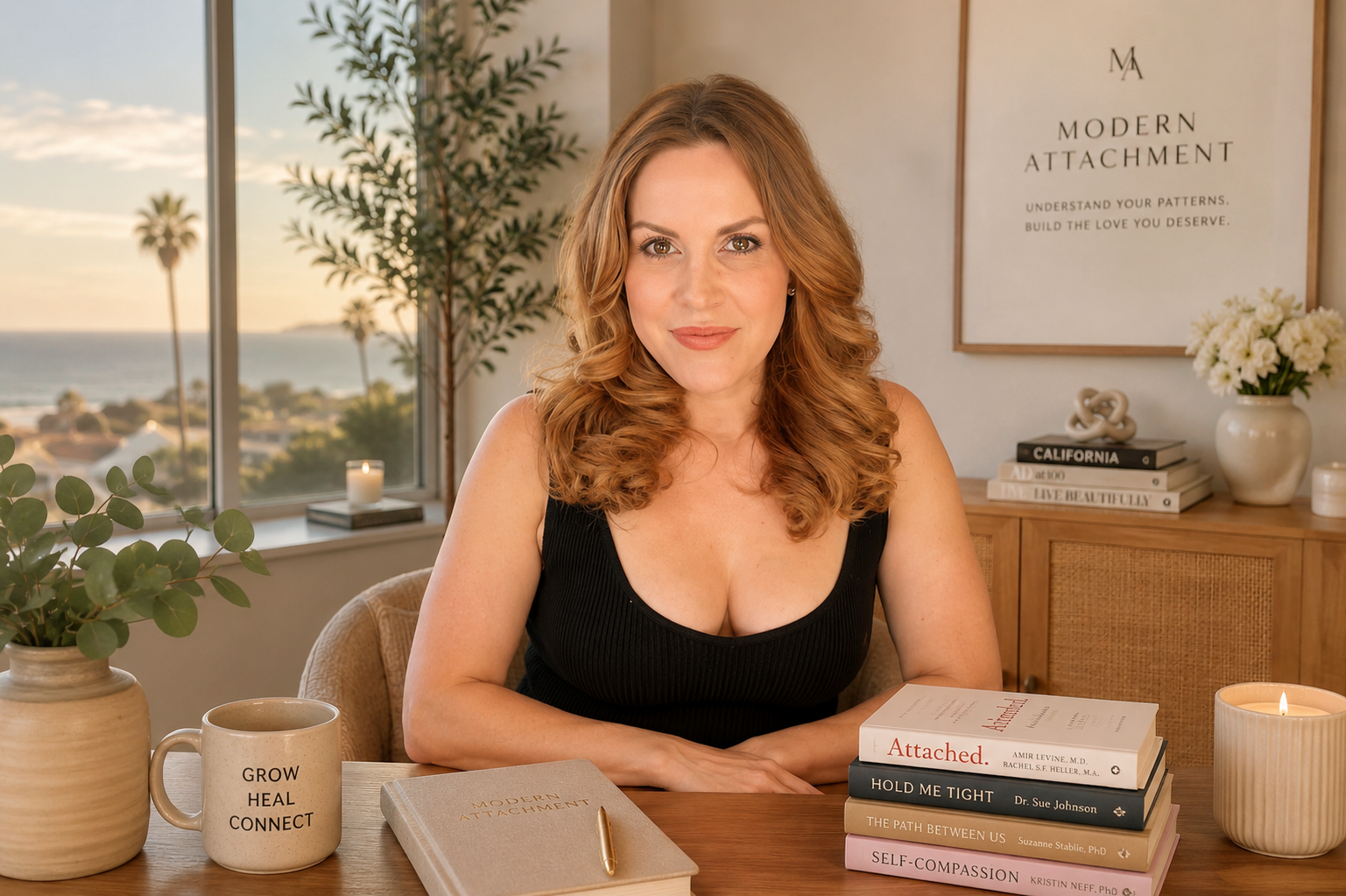
I'm a clinical psychologist, former matchmaker, and adjunct professor teaching Love, Dating & Modern Matchmaking at the University of San Diego.
I help ambitious, growth-oriented people understand their attachment patterns and build healthier relationships. Many of my clients come to me after years of therapy, self-help books, podcasts, and personal growth work - still wondering why the same patterns keep showing up.
Together, we'll identify what's keeping you stuck and create a plan that fits where you are right now.
Frequently Asked Questions About Anxious Attachment Style Coaching
-
You may have an anxious attachment style if you frequently:
Overthink texts, calls, or changes in communication
Worry that someone is losing interest in you
Need frequent reassurance in relationships
Feel highly sensitive to rejection, distance, or inconsistency
Find yourself becoming preoccupied with relationships, especially when someone pulls away
Many successful, self-aware adults struggle with anxious attachment. It isn't a sign that something is wrong with you—it often develops as an adaptation to early relationship experiences and can be changed.
-
Yes. Anxious attachment is not a life sentence.
Research shows that attachment patterns can become more secure through self-awareness, new relationship experiences, therapy, coaching, and intentional practice.
The goal isn't to become emotionally detached. The goal is to feel connected without constantly feeling anxious, uncertain, or dependent on reassurance.
-
Many people with anxious attachment are unconsciously drawn to partners who feel familiar rather than healthy.
You may find yourself attracted to people who are:
Inconsistent
Hard to read
Slow to commit
Emotionally distant
Sending mixed signals
The nervous system often mistakes uncertainty for chemistry. Learning to recognize this pattern is one of the first steps toward building healthier relationships.
-
Anxious attachment is not the same as being needy.
People with anxious attachment often have legitimate needs for connection, reassurance, and emotional closeness. The challenge is that fear of abandonment can amplify those needs and create relationship behaviors that feel overwhelming to both partners.
The solution isn't having fewer needs - it's learning how to communicate them in a healthy, secure way.
Here are some tips to help you feel a bit more secure.
-
For someone with anxious attachment, delayed communication can activate fears of rejection, abandonment, or loss.
Your brain may begin filling in the gaps with worst-case scenarios:
"Did I say something wrong?"
"Are they losing interest?"
"Did I mess this up?"
This response isn't irrational. It's often an automatic nervous system reaction rooted in attachment experiences. Learning how to regulate those reactions can significantly reduce relationship anxiety.
-
Absolutely.
Many ambitious, intelligent, and emotionally aware people struggle with anxious attachment.
You may feel confident in your career, friendships, and daily life while still feeling overwhelmed, insecure, or stuck in romantic relationships.
Relationship anxiety is not a reflection of your intelligence, success, or worth.
-
Secure attachment doesn't mean never feeling anxious.
Securely attached people typically:
Communicate openly
Trust themselves and their partners
Handle conflict without excessive fear
Maintain a sense of self within relationships
Feel connected without becoming consumed by the relationship
Security is less about perfection and more about resilience, trust, and emotional flexibility.
Here are some tips to help you feel a bit more secure.
-
Yes. Anxious attachment can impact every stage of dating.
Common experiences include:
Becoming emotionally invested very quickly
Constantly checking for signs of interest
Feeling devastated by dating uncertainty
Struggling with mixed signals
Staying in situationships longer than you'd like
Ignoring red flags because of strong chemistry
Learning about your attachment patterns can help you date more intentionally and confidently.
Take this 2-minute, free quiz to uncover your attachment style.
-
Childhood experiences often play a role, but they're not the whole story.
Attachment patterns can be shaped by:
Early caregiving relationships
Family dynamics
Emotional inconsistency
Past romantic relationships
Betrayal, rejection, or heartbreak
Significant life experiences
The good news is that understanding where your patterns came from can help you change them.
-
Building secure attachment often involves:
Learning to regulate relationship anxiety
Strengthening self-trust
Identifying unhealthy relationship patterns
Setting healthier boundaries
Choosing emotionally available partners
Developing secure communication skills
With practice, many people move from anxious attachment toward a more secure and fulfilling way of relating.
-
It depends on your goals.
Therapy can help you understand the deeper roots of attachment patterns and heal unresolved emotional wounds.
Coaching can help you apply attachment insights to real-life dating, relationships, boundaries, communication, and decision-making.
Many people benefit from a combination of both depending on their needs.
You don’t need to have all the answers - book your clarity call and I can help you decide what’s best for you.
-
Anxious attachment itself doesn't ruin relationships.
What creates challenges are the coping strategies that often develop around it, such as:
Excessive reassurance seeking
Overanalyzing
Protest behaviors
Difficulty tolerating uncertainty
Fear-based decision making
When these patterns are recognized and addressed, relationships often become healthier, calmer, and more connected.
Not Sure Anxious Attachment Tells The Whole Story?
Many people identify with traits from more than one attachment style. Explore the path that feels most familiar.

Value independence but struggle with closeness.
Crave connection while fearing it.

Build healthier relationship patterns.
Not Sure Which Attachment Style Fits Best?
Take the Attachment Styles Quiz for a personalized recommendation.

You’re Not Too Much.
You’re Just Ready For More.
Break the pattern. Reclaim your power. Build the love you actually want. Let’s create a relationship that feel safe, secure, and loving - for you and for them.
A Quick Note
Modern Attachment is a psychology-informed coaching and educational service designed to help you better understand your attachment patterns, relationships, and personal growth.
Coaching is not psychotherapy, mental health treatment, or healthcare services, and participation does not establish a psychologist–patient relationship.
If you're seeking therapy or clinical support, please connect with a licensed mental health professional.