
Security Isn't Something You're Born With. It's Something You Build.
SECURE ATTACHMENT COACHING
Secure attachment isn't about being perfect. It's about feeling safe enough to be yourself, communicate openly, trust your instincts, and stay connected without losing yourself in the process.
If you've spent years struggling with anxiety, avoidance, overthinking, people-pleasing, emotional walls, or relationship uncertainty, secure attachment coaching can help you create a healthier way of relating to yourself and others.
As seen in:



What Is Secure Attachment?
Secure attachment is the ability to remain connected to yourself while staying connected to others.
People with secure attachment generally:
Communicate openly and honestly
Trust themselves and others
Set healthy boundaries
Navigate conflict without panic or withdrawal
Maintain independence within relationships
Feel worthy of love and connection
Recover from relationship challenges more effectively
Experience greater emotional stability
What Secure Attachment Actually Looks Like
Many people imagine secure attachment as always feeling confident, calm, and unaffected. That's not reality.
Secure people still:
Experience insecurity sometimes
Feel vulnerable
Get hurt
Face rejection
Encounter conflict
The difference is that these experiences don't completely overwhelm their sense of self.
Secure attachment doesn't mean never feeling anxious, hurt, disappointed, or triggered.
It means having the tools to navigate those experiences without becoming consumed by them. They trust themselves to handle what happens.
Signs You're Moving Toward Secure Attachment

You Stop Overanalyzing Every Interaction
You spend less time decoding texts, guessing what people mean, or searching for reassurance.

You Communicate Your Needs More Directly
Instead of hoping people will figure it out, you learn to express what you want and need clearly.

You Feel Less Controlled by Fear
Fear no longer makes all of your relationship decisions for you.

You Trust Yourself More
You become less dependent on external validation and more connected to your own judgment.

Relationships Feel More Peaceful
Connection starts to feel less exhausting and more fulfilling.

Why Most People Don't Become Secure Through Insight Alone
Many people already understand their attachment patterns. They know why they overthink. They know why they people-please. They know why they pull away. Yet awareness alone doesn't automatically create security.
Secure attachment develops through:
New experiences
New behaviors
New emotional skills
New ways of relating
It's not simply something you learn. It's something you practice.
Who This Is For:
You've done significant personal growth work but still find yourself repeating familiar relationship patterns.
You want healthier relationships without losing your independence or identity.
You're tired of anxiety, overthinking, people-pleasing, or emotional self-protection running the show.
You want to communicate more confidently and authentically.
You want stronger boundaries without guilt.
You want to feel calmer, more secure, and more confident in your relationships.
You're ready to stop merely understanding your patterns and start changing them.

When you understand your attachment style, you stop blaming yourself and start building the love you’ve always wanted.
-Dr. Lindsay O’Shea
Clinical Psychologist & Attachment Expert
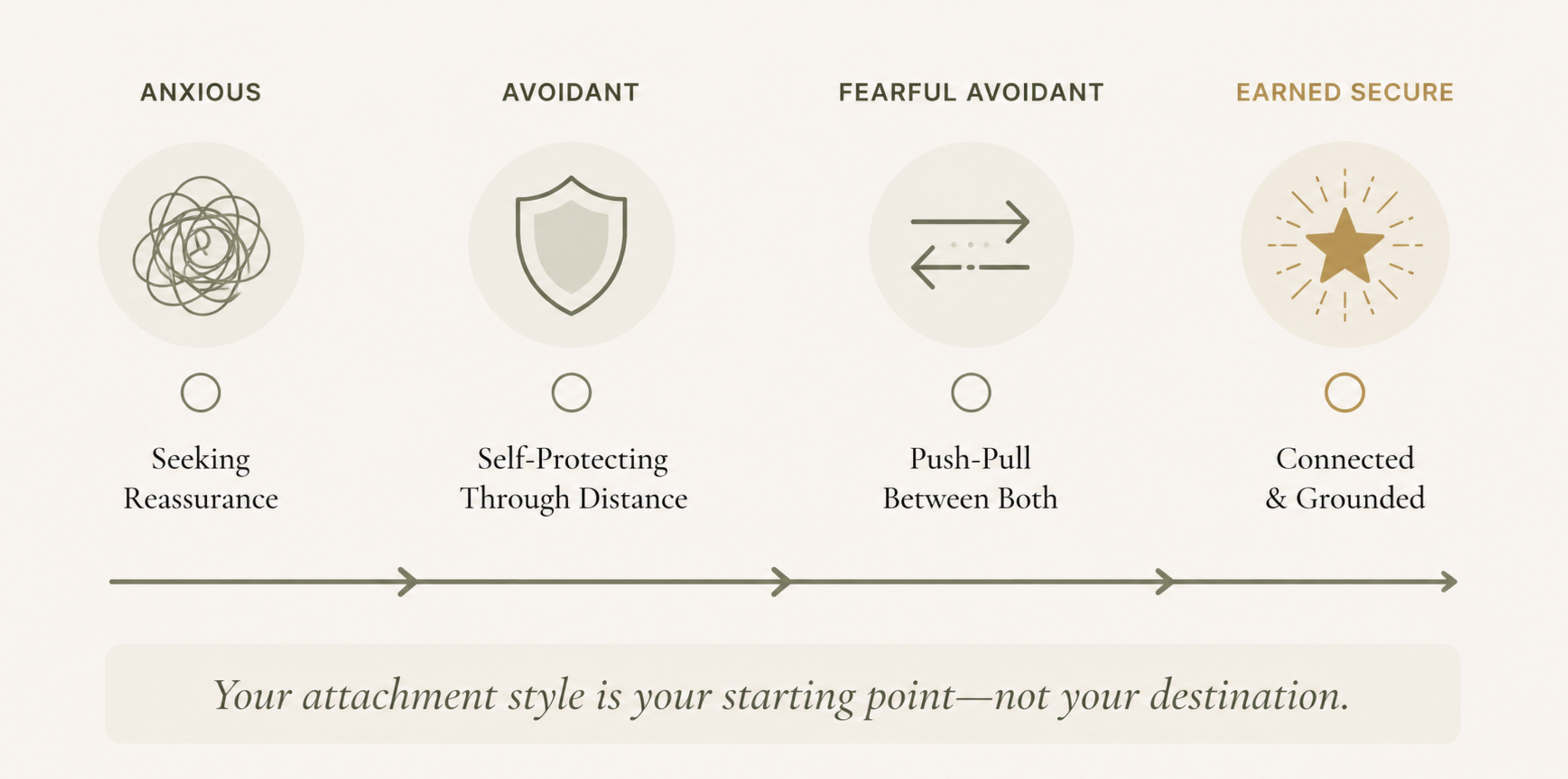
Can You Become More Secure?
Yes. Attachment styles can change.
They are patterns, not permanent identities. Research shows that attachment can become more secure through new experiences, healthy relationships, self-awareness, emotional regulation, and intentional practice. Many people who identify as anxious, avoidant, or fearful avoidant develop what psychologists call earned secure attachment through new experiences, healthy relationships, self-awareness, emotional regulation, and intentional practice.
The goal isn't perfection. It's learning how to stay connected to yourself and others when relationships become challenging.
How Secure Attachment Coaching Helps
As you become more securely attached, your standards, choices, and relationships often begin to change as well.

Build Self-Trust
Develop confidence in your ability to navigate relationships, uncertainty, and difficult emotions.

Strengthen Emotional Regulation
Learn how to respond thoughtfully instead of reacting automatically.

Improve Communication
Express needs, boundaries, desires, and concerns more effectively.

Create Healthier Relationship Patterns
Replace old survival strategies with new relational skills.

Develop Greater Emotional Security
Feel more grounded, confident, and connected in relationships.
UnPattern. Reclaim. Rewire.
The Modern Attachment Approach
UnPattern
We uncover the subconscious patterns keeping you stuck in anxiety, overthinking, and people-pleasing.

2. Understand
We make sense of your attachment blueprint - so you can stop blaming yourself and start getting curious.

3. Rewire
We regulate your nervous system and build new relational skills that create lasting change.

4. Embody
You step into your secure identity and attract relationships that match.
This isn’t about becoming someone new.
It’s about becoming who you’ve always been underneath the patterns.
MEET YOUR COACHHi, I’m Dr. Lindsay O’Shea
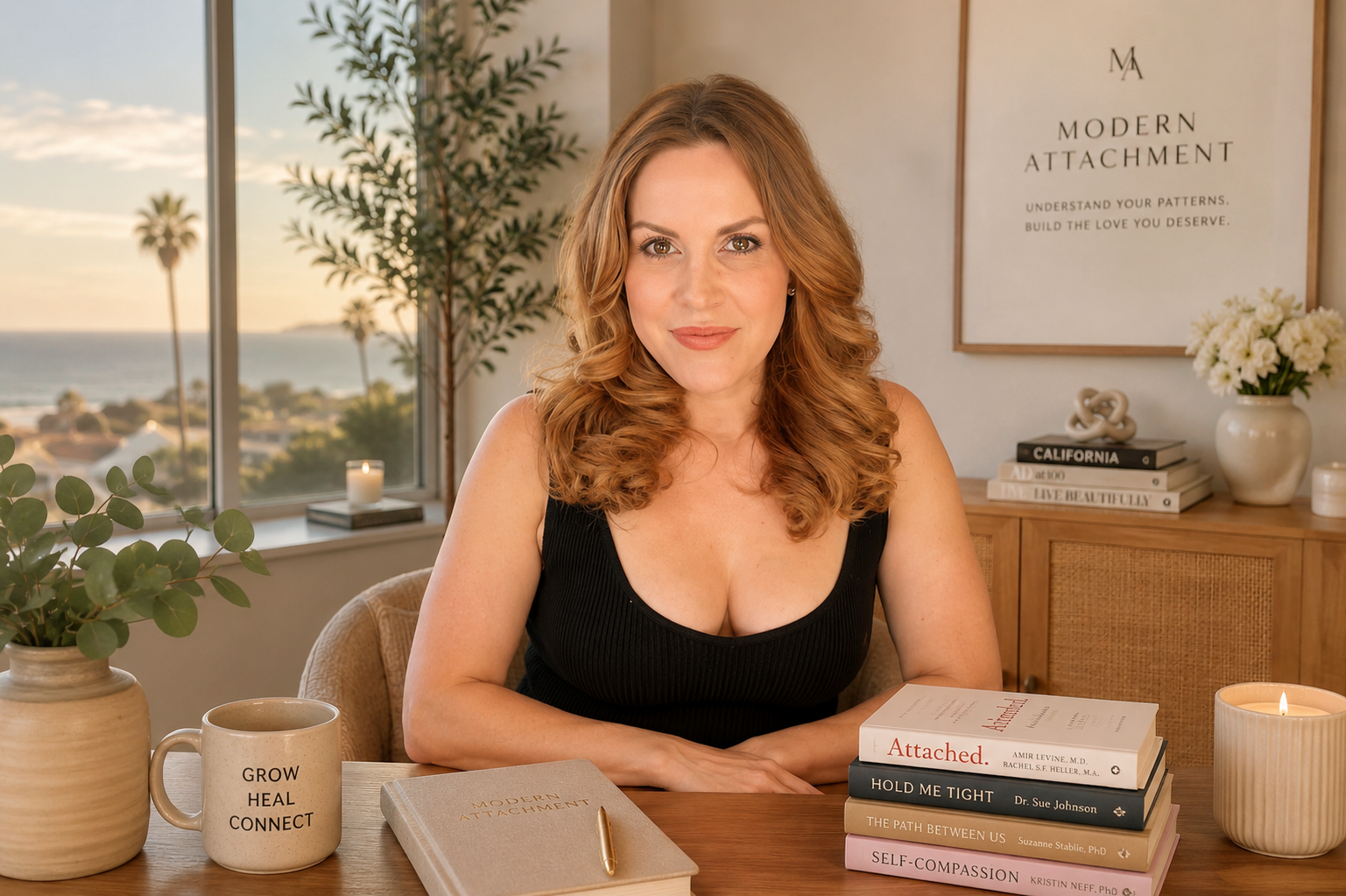
I'm a clinical psychologist, former matchmaker, and attachment specialist who helps ambitious, growth-oriented people build healthier relationships.
Many clients come to me after years of therapy, self-help books, podcasts, and personal development work - still wondering why the same relationship patterns keep showing up.
Together, we'll identify what's keeping you stuck and create a practical path toward greater security, confidence, and connection.
Frequently Asked Questions About Secure Attachment Style Coaching
-
Yes. Attachment patterns are flexible and can change over time through awareness, intentional practice, and healthier relational experiences.
-
No. Securely attached people still experience anxiety, insecurity, and relationship challenges. The difference is how they respond to them.
-
That's exactly what this work is designed to help with. Coaching focuses on helping you develop more secure patterns regardless of your starting point.
Take the 2-minute quiz to find your attachment style.
Learn more about coaching for your attachment style:
-
No. Secure attachment is a relational style, not a personality trait. It reflects how you relate to yourself and others.
-
Coaching focuses on education, self-awareness, skill-building, and behavior change. Coaching is not psychotherapy and does not provide mental health treatment or diagnosis.
-
Absolutely.
Secure attachment doesn't mean you've finished growing or that relationships never feel challenging. It simply means you have a stronger foundation for navigating them.
Many securely attached clients seek coaching because they want to:
Build healthier dating and relationship skills
Navigate a breakup, transition, or major life change
Improve communication and conflict resolution
Strengthen boundaries and self-trust
Create more intentional relationships
Deepen their understanding of themselves and their patterns
The goal isn't to "fix" you. It's to help you continue growing into the kind of relationships and life you want to create.
Secure attachment isn't the finish line - it's the foundation for deeper connection, confidence, and fulfillment.
Building Toward Greater Security?
Many people identify with traits from more than one attachment style. Explore the path that feels most familiar.
Value independence but struggle with closeness.
Crave connection while fearing it.

Desire closeness and constant reassurance.
Not Sure Which Attachment Style Fits Best?
Take the Attachment Styles Quiz for a personalized recommendation.

What If Relationships Didn't Feel So Hard?
You don't need to become a different person to create healthier relationships. You simply need new experiences, new tools, and a new way of relating to yourself and others. The patterns that once protected you don't have to define your future.
Ready to build healthier relationships?

A Quick Note
Modern Attachment is a psychology-informed coaching and educational service designed to help you better understand your attachment patterns, relationships, and personal growth.
Coaching is not psychotherapy, mental health treatment, or healthcare services, and participation does not establish a psychologist–patient relationship.
If you're seeking therapy or clinical support, please connect with a licensed mental health professional.